
At Chambers Bank, protecting our customers is part of being a true hometown bank. Fraud continues to evolve, and unfortunately, the families and businesses we serve are being targeted every day.
Here are five of the most common scams we’re seeing, along with tips to help you stay protected.
1. Impostor Scams (Bank, Business & IRS Impersonation)
This is one of the fastest-growing fraud trends.
Scammers pretend to be:
- Your bank
- The IRS
- A utility company
- A well-known business
- Even local law enforcement
They may call or text demanding immediate payment, claiming:
- Your account has been compromised
- Your power or water will be shut off
- You owe back taxes
- A warrant will be issued
- Law enforcement will be involved
They create urgency and fear — and often spoof caller ID to look legitimate.
Remember:
- The IRS will not call demanding immediate payment.
- Legitimate businesses do not demand payment via gift cards, wire transfers, or cryptocurrency.
- Chambers Bank will never ask for your password, PIN, or one-time login code.
If you receive a suspicious call or text, hang up and contact the business directly using a verified phone number.
2. Phishing, Smishing & Vishing
These scams come through:
- Email (phishing)
- Text messages (smishing)
- Phone calls (vishing)
They often look like legitimate security alerts about “unusual activity” on your account.
The goal? To trick you into:
- Clicking a malicious link
- Entering your login credentials
- Sharing a security code
Once scammers gain access, they can quickly move funds.
Tip: Never click links in unexpected messages. If you’re concerned about your account, log in directly through your bank’s official website or mobile app.
3. Authorized Payment & Social Engineering Scams
These scams are especially difficult because the victim is manipulated into authorizing the payment themselves.
Common examples include:
- Romance scams
- Fake investment opportunities
- “Emergency” requests from someone posing as a family member
- Online marketplace overpayment scams
Once you send money — especially via wire, ACH, cash app, or cryptocurrency — it can be very difficult to recover.
If someone pressures you to send money quickly, pause and talk to a trusted family member or your banker first.
4. Lottery & Advance-Fee Scams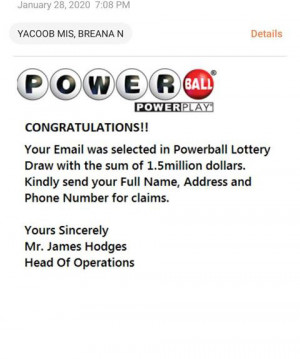
“You’ve won a prize!”
Scammers claim you’ve won:
- A lottery
- A sweepstakes
- A grant
But first, you must pay:
- Taxes
- Processing fees
- Shipping costs
If you didn’t enter a contest, you didn’t win. Legitimate prizes do not require upfront payment.
5. Business Email Compromise (BEC) & Wire Fraud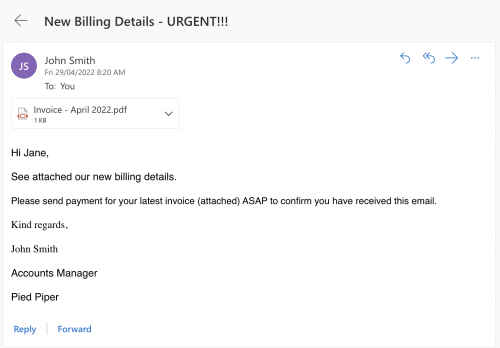
This scam targets businesses and nonprofits.
Fraudsters:
- Hack or spoof email accounts
- Send fake invoices
- Pretend to be vendors or executives
- Request urgent wire transfers
By the time the fraud is discovered, funds may already be gone.
For businesses: Always verify wire instructions with a known, trusted phone number before sending funds.
How Chambers Bank Helps Protect You
As your community bank, we are committed to:
- Monitoring accounts for suspicious activity
- Educating customers about emerging fraud trends
- Providing digital banking tools with layered security
- Partnering with local law enforcement when needed
But the strongest protection is awareness.
Protect Yourself
- Slow down when someone creates urgency
- Never share passwords, PINs, or one-time security codes
- Verify payment requests independently
- Be cautious of unexpected calls, texts, or emails
- Talk to your banker if something feels off
If you believe you’ve been targeted by a scam, contact your local Chambers Bank branch immediately.
Fraudsters rely on fear, urgency, and secrecy. At Chambers Bank, we believe in community, transparency, and looking out for one another.
Together, we can keep our families and businesses safe.